The Thread That Was Always There
“You’re not brown enough.”
“You’re brown so why can’t you dance.”
“I don’t see colour.”
“You’re white passing so what does it matter.”
These were not one-off comments. They were the background noise of my entire life. Friends, classmates, strangers, even adults who should have known better. And at home, the distortion ran deeper. Racist language was normalised. You do not question it as a child. You absorb it.
Instead of questioning the comments, I questioned myself.
Why do I feel too much and not enough at the same time.
Why does my skin make other people assume things about me.
Why do I feel shame around something I barely understand.
He Rau Murimuri Aroha (2020) speaks to this clearly — children raised in environments where their cultural identity is suppressed, misunderstood, or minimised often learn disconnection before they ever learn belonging.
Before I understood anything about my Māori heritage, I had already learnt to shrink the parts of myself that might draw attention. This is where the story begins — the wound before the reconnection.
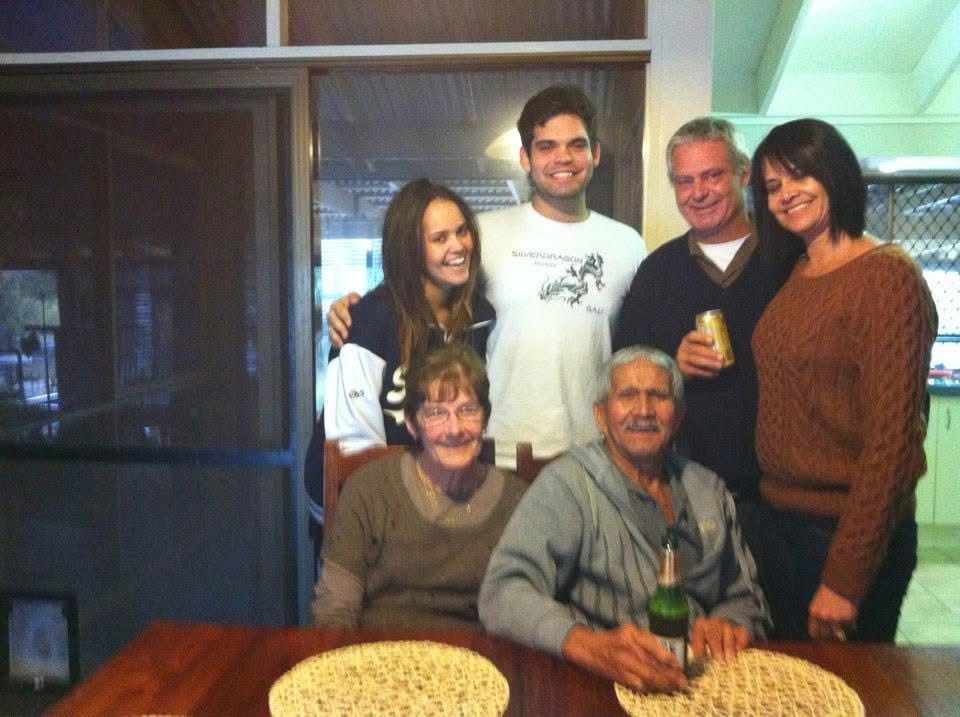
Something that has always stayed with me is a story my Mum told about when my uncle was born. In Māori culture it was common for the first born to be gifted to the Nannies or aunties to raise. My Nan, who is Pākehā, said no. She wanted her babies with her.
Yet when I look back at my own early childhood, I was always with Nan and Pop. Sleepovers. Beach days. Playing darts with Pop. He taught me how to fish, how to steer a tinny, and how to say haere mai.
My earliest memories are mostly with them. I lived with my parents, yet so much of my feeling of safety and softness came from Nan and Pop. Even though Nan had stopped the traditional practice of placing children with extended whānau, the cycle returned in a different way through me. I found belonging with them.
Pop spoke lightly about home — a few words, small stories, mentions of his family. As a child, I thought it was incredible that he knew another language. Supporting New Zealand teams in sport became our ritual. It was connection. It was one of the only moments I felt linked to something bigger than myself, even though I didn’t have words for that yet.
He Rau Murimuri Aroha (2020) calls this early but fragile exposure — cultural threads that exist, but without scaffolding because of colonisation pressures and language loss. That is what my childhood felt like. Close, but thin.
Everything shifted for a moment in Year Four.
My teachers were Miss Arthur and Miss Eagle. Miss Arthur was from New Zealand, and she understood exactly who Sir Āpirana Ngata was and what he meant for Māori people. Her pride made me feel proud. Her excitement made me feel connected. She opened something in me that had been quiet until then.
We learnt the traditional poi dance.
We did heritage projects.
I made a brochure about the Ngata side of my family — my Year Four version of “this is where I come from.”
It was brief, but it mattered. It was the first time someone reflected my culture back to me in a way that felt alive. The Māori Identity and Cultural Engagement Scale (2012) describes this as a momentary strengthening of identity through visibility, even if the environment around you doesn’t support it long term.
By adolescence, the small threads from childhood had thinned again.
At school I felt like I never fully fit anywhere. Not with the white girls, not fully with the Islander girls either. Some were welcoming. Some made it clear I did not belong with them.
I heard comments about my skin. About what I should be able to do. About what “brown” should look like. I didn’t have the language to push back. I turned it into jokes or stayed quiet.
Netball was the one place where that tension softened. I was around Māori, Samoan, Tongan, and Fijian girls — a mix of cultures that felt familiar in a way I couldn’t explain. I wasn’t fully inside their world, yet I wasn’t fully outside it either. It felt grounding.
The Canterbury mixed Māori identity thesis describes this as belonging-through-proximity — recognising yourself in others before you have the confidence to claim it internally.
In my twenties, the disconnection didn’t happen because I chose it. It happened because of the environments I entered.
I stopped playing netball — quietly removing the only cultural touchpoint I had. After that, my world became almost entirely Australian and white. Not intentional — just circumstance. Hairdressing, high school friends, workplaces. It was the environment I was in.
Because I hadn’t been raised with cultural grounding, the distance didn’t feel strange. It felt normal.
Still, whenever I met Māori or Pacific people, I felt something shift internally. Not discomfort with them — discomfort with myself. A sudden awareness of how much I didn’t know, how far I felt from where I came from, and how unsure I was of my place in those spaces.
The Canterbury thesis describes this as recognising the thread, but not yet knowing how to hold it — and that thread kept showing up in ways I didn’t always expect. Even years later in the UK, someone said to me, “You’re not even black,” as if they had the authority to correct my identity. It didn’t shock me. It just reminded me how often other people tried to define me before I ever had the grounding to define myself.
That was my twenties and early thirties — living a life that made sense on the surface while something underneath was waiting for a place to belong.
The real shift didn’t begin in 2025. It began quietly back in 2018.
Pop, my brother, and I went to New Zealand. I organised everything — the flights, the timing, the logistics. And as soon as we arrived, Pop’s behaviour changed.
It was like he expected us to suddenly know cultural roles we were never taught. Serving food. Cleaning. Looking after him in ways that made sense inside Māori tikanga — but not inside the life we were raised in.
Our family didn’t grow up practising those protocols, so being expected to follow them felt confusing and unfair.
I remember telling my brother,
“This makes no sense. Our cousins were raised in this. We weren’t. How are we supposed to know what he wants?”
The trip was beautiful on the surface, but underneath, I felt uncomfortable and frustrated — like I was being measured against traditions I’d never been given access to.
2025 was different from the moment we landed.
We went back as adults — Mum came, Uncle Brad came, Pop was older, and none of us carried the same unspoken pressure. I didn’t organise anything. There were no expectations, no invisible roles, no performance.
The whole trip felt warm. Simple. Wholesome.
And somewhere on the long drive up the East Coast, past the hills and the coastline and the quiet stretch of land that holds our family history, something shifted in me. I remember looking out the window and saying to Mum and my uncle,
“Instead of working in community in Australia… I could move back here. I could work in the community. I could do my counselling here.”
It didn’t feel dramatic. It felt obvious — the most aligned idea I’d had in years. I’ve always wanted to work within communities, and for the first time, the path felt clear.
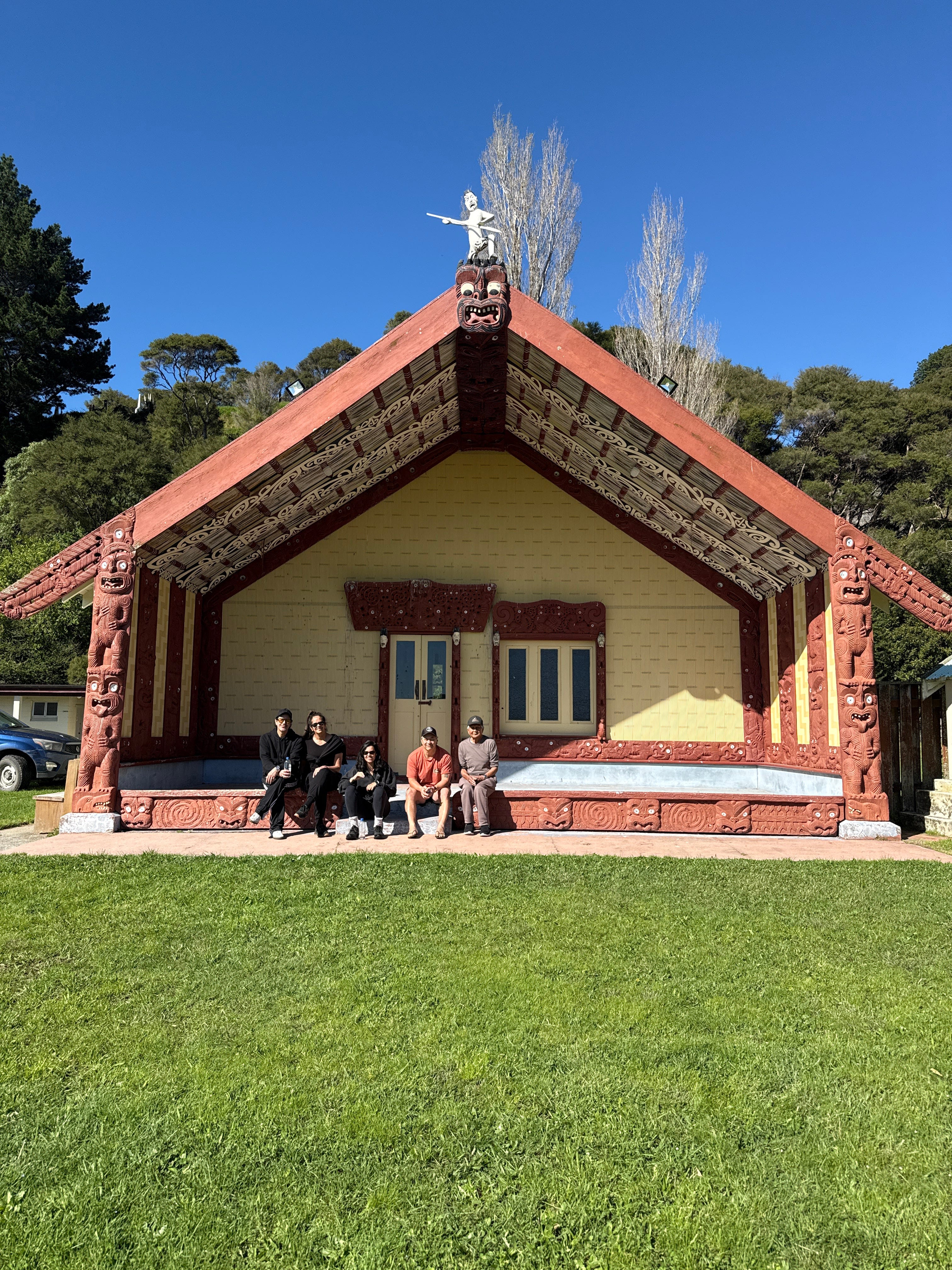
Being there made it simple:
I want to live in New Zealand.
I want to learn our history properly.
I want to learn the language in a way that is lived, not theoretical.
And I want to help rebuild our family homes, not just visit them.
My family felt connected. The place felt natural. And for the first time, I felt aligned.
I learnt this year that Mum had wanted to reconnect too; she just wasn’t in the headspace for it back then. Her environment made her second guess herself. Now she’s more confident and she does what feels right for her.
It wasn’t a dramatic awakening. It was subtle. Soft. A beginning.
It felt like the first moment where coming home didn’t feel like performing anything. It just felt possible.
Looking back now, it feels clear that none of this came out of nowhere. The thread was always there — thin in places, quiet in others, but never gone. Every moment of disconnection, every unanswered question, every comment that made me shrink, was sitting on top of something older and deeper that hadn’t been given the chance to speak. Spirit doesn’t shout. Whakapapa doesn’t force. They wait for the right conditions, the right safety, the right version of you.
2025 didn’t give me something new — it revealed what had been trying to reach me my whole life. The welcome, the ease, the clarity about reconnecting, the thought that came out of my mouth before I even realised it — Maybe I should finish my study and come back here — none of it felt random. It felt like recognition.
This is the part of the story underneath everything: interrupting a generational pattern of disconnection, understanding a suppressed identity, returning to learn what I was not given, choosing to rebuild connection intentionally, feeling spirit and whenua calling me back, and finally seeing how colonisation shaped the silence I grew up inside.
Reconnection isn’t a single moment.
It’s the slow remembering of what has always been yours.
References
Ngaha, A. B. (2011a). Te Reo, a language for Māori alone? An investigation into the relationship between the Māori language and Māori identity [Thesis]. In University of Auckland.
Rocha, Z. (2012b). (Mixed) Racial formation in Aotearoa/New Zealand: framing biculturalism and ‘mixed race’ through categorisation. Kōtuitui New Zealand Journal of Social Sciences Online, 7(1), 1–13. https://doi.org/10.1080/1177083x.2012.670650
Wirihana, R., Gabel, K., Penehira, M., Cavino, H., George, L., Ngamu, E., Sidwell, M., Hauraki, M., Martin-Fletcher, N., Ripia, L., Davis, R., Ratima, P., Wihongi, H., & Vaeau, T. (2019). HE RAU MURIMURI AROHA: Wāhine Māori insights into historical trauma and healing (C. Smith & R. Tinirau, Eds.). Te Atawhai o Te Ao: Independent Māori Institute for Environment & Health. https://teatawhai.maori.nz/wp-content/uploads/2020/04/He-Rau...